Ontra Innovation Series
Making Optimization Practical for Everyday Transit Planning
May 10, 2026
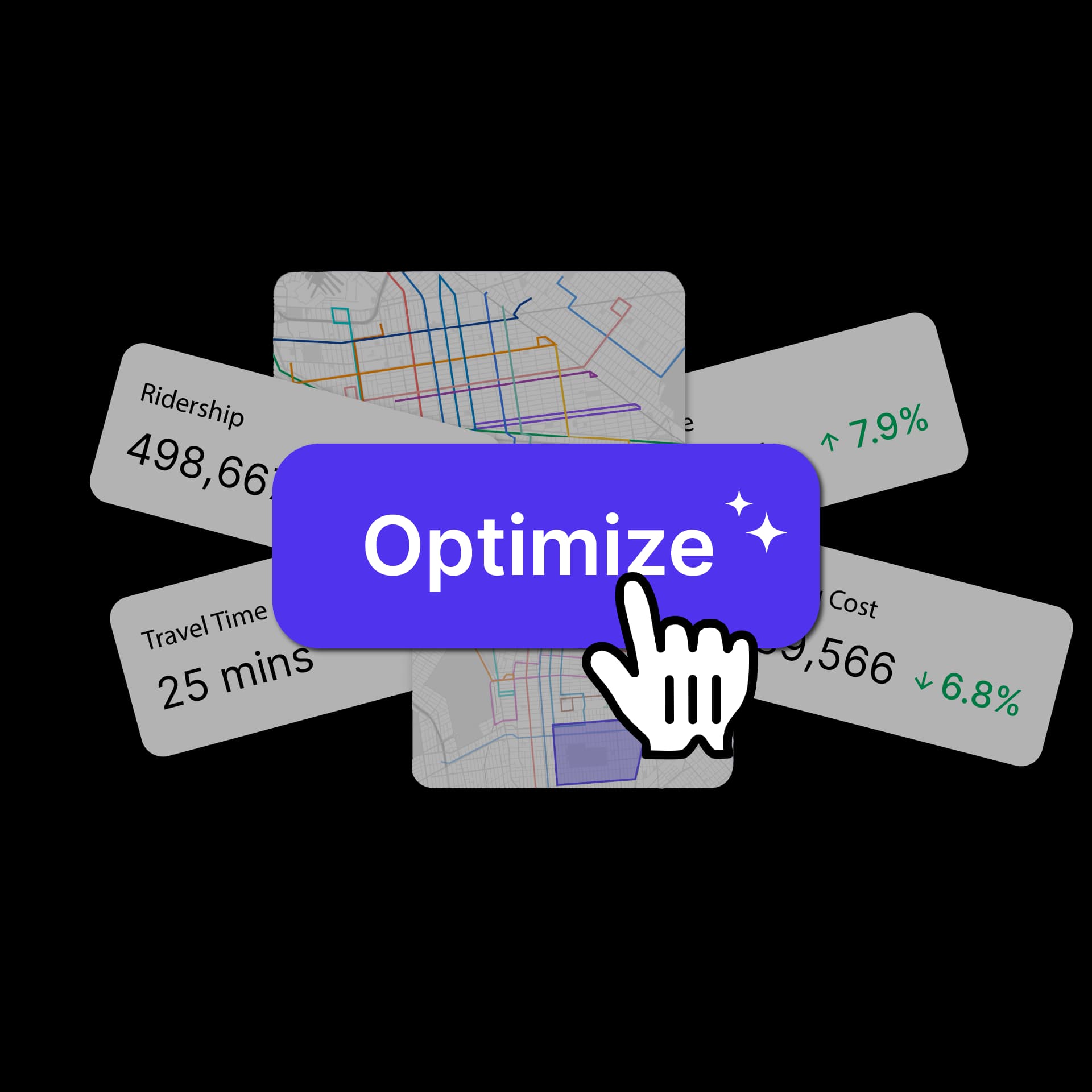
Ontra's Planning Platform uses optimization to help agencies discover service options they may not have drawn manually, then test those options against predicted demand and real-world constraints like fleet, budget, coverage, and implementation risk.
Optimization can help transit agencies search thousands of possible service designs, but only if it is grounded in the real constraints agencies face every day.
That is the challenge Ontra has been focused on solving. We are not building optimization as a black box that replaces planning judgment. We are building it as a practical planning tool: a way for agencies to discover better service options, test them against predicted rider demand, and understand how each option performs under real-world constraints.
Traditional scenario planning asks planners to manually create a few alternatives, evaluate them, and decide which one performs best. Optimization asks a broader question: what are the best alternatives the team may not have thought to test yet?
That difference matters. There are only so many vehicles. Only so many operator hours. Only so much budget.
Every added trip, extended route, new zone, or higher frequency creates tradeoffs somewhere else in the network. The value of optimization is not that it avoids those tradeoffs. It is that it helps make them visible earlier, across more possible choices, so planners can make better decisions with more confidence.
What optimization helps agencies do
In practice, optimization helps agencies search for stronger service options inside real-world limits.
- Discover service options they may not have drawn manually.
- Test those options against predicted rider demand.
- Respect constraints like fleet, budget, coverage, and implementation risk.
- Compare more possible choices before committing to a plan.
- Make tradeoffs visible earlier in the planning process.
This post goes deeper on one part of the Planning Platform. For the full system context, read the Planning Platform overview.
Optimization is not a replacement for planning judgment
Optimization can be misunderstood as a system that produces "the answer." That is not how we think about it.
A transit plan is shaped by local knowledge, policy goals, community priorities, operational realities, and political constraints. An optimizer cannot replace those judgments. It cannot know every:
- Local commitment.
- Public concern.
- Operator constraint.
- Implementation challenge.
Planners have to choose how to represent those priorities in the planning process.
What optimization can search
What optimization can do is search the design space more thoroughly than a human team can by hand. It can evaluate many possible combinations of:
- Routes.
- Frequencies.
- Stop patterns.
- Service configurations.
- Zones.

Then it can surface options that perform well under the goals and constraints the agency defines.
The planner still decides what matters. The optimizer helps reveal what is possible.
That is the balance we are designing for: planner control, expanded search, and transparent tradeoffs.
From evaluating options to discovering better options
The earliest version of the platform was built around evaluation. Users could define a set of service options, run those options through the model, and compare the results. That was already valuable: it helped planning teams understand which manually defined alternatives performed best and how those alternatives compared against the existing network.
But evaluation alone still depends on the user knowing which options to test.
That is a real limitation in transit planning. A planning team may have a strong sense of the problem, but not know every:
- Route alignment.
- Stop pattern.
- Zone design.
- Frequency change.
- Service policy that could solve it.
The number of possible combinations is too large to explore manually, and the best answer may not be one of the options someone thought to draw first.
That is why we have been moving from an evaluation engine to a recommendation engine.
Discovering options planners may not draw
Instead of only scoring the alternatives a user has already created, the platform can now help surface and discover service changes that were not explicitly input in advance. That can include:
- New or modified routes.
- Adjusted stop patterns.
- Redesigned zones.
- Different frequencies.
- Service configurations that better match the goals of the project.
The planner still controls the process. They define the objectives, constraints, assumptions, and planning context. They can also manually enter specific service changes they already want to test, while using the platform to generate additional options they may not have considered. In that way, user-defined ideas and system-generated recommendations can be evaluated side by side. Optimization can search a much larger design space and return options that would be difficult to find through manual iteration alone.
That shift is central to what makes the platform different. The goal is not just to tell agencies whether a proposed scenario is good. It is to help them find stronger scenarios in the first place.
Optimizing around predicted rider demand
A recommendation is only useful if it reflects how people are likely to respond.
A route change, frequency change, or new service zone does not exist in isolation. It changes:
- Travel times.
- Access to destinations.
- Transfer opportunities.
- Wait times.
- The relative attractiveness of transit.
A network that looks efficient operationally may fail if it does not match rider demand. A network that improves access in the right places may unlock ridership that is not visible from current boardings alone.
That is why demand modeling sits at the center of the platform. Ontra combines network, ridership, demographic, and travel pattern data to forecast where and when people are likely to use transit. This allows planners to evaluate both existing ridership and latent demand: not just who rides today, but who could be better served by a different network.
Forecasting rider response across scenarios
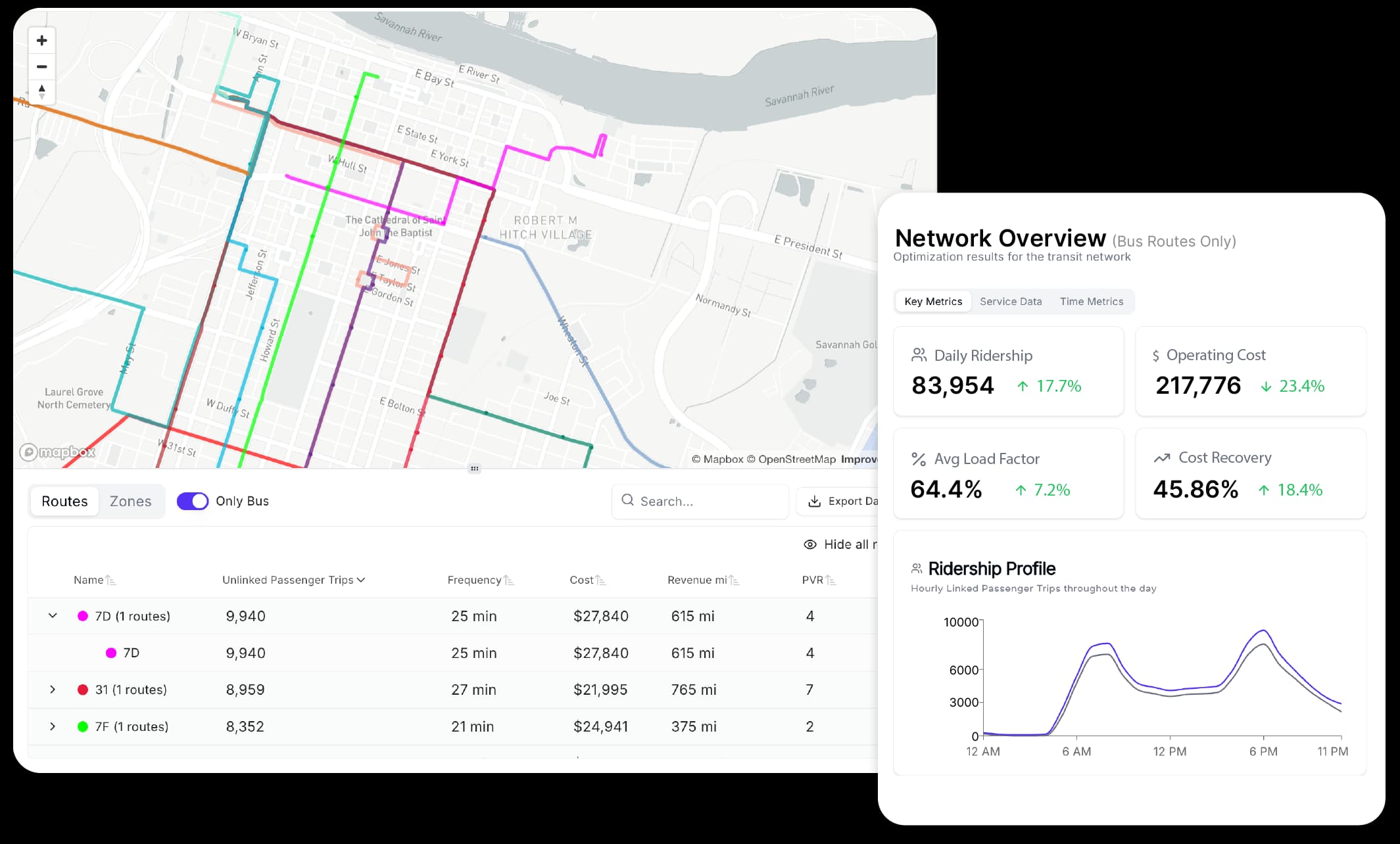
By forecasting rider response across scenarios, the platform helps agencies compare alternatives based on expected outcomes rather than intuition alone. Planners can see how proposed changes may affect ridership, travel times, access to jobs and services, equity outcomes, operating cost, and fleet needs before committing to a plan.
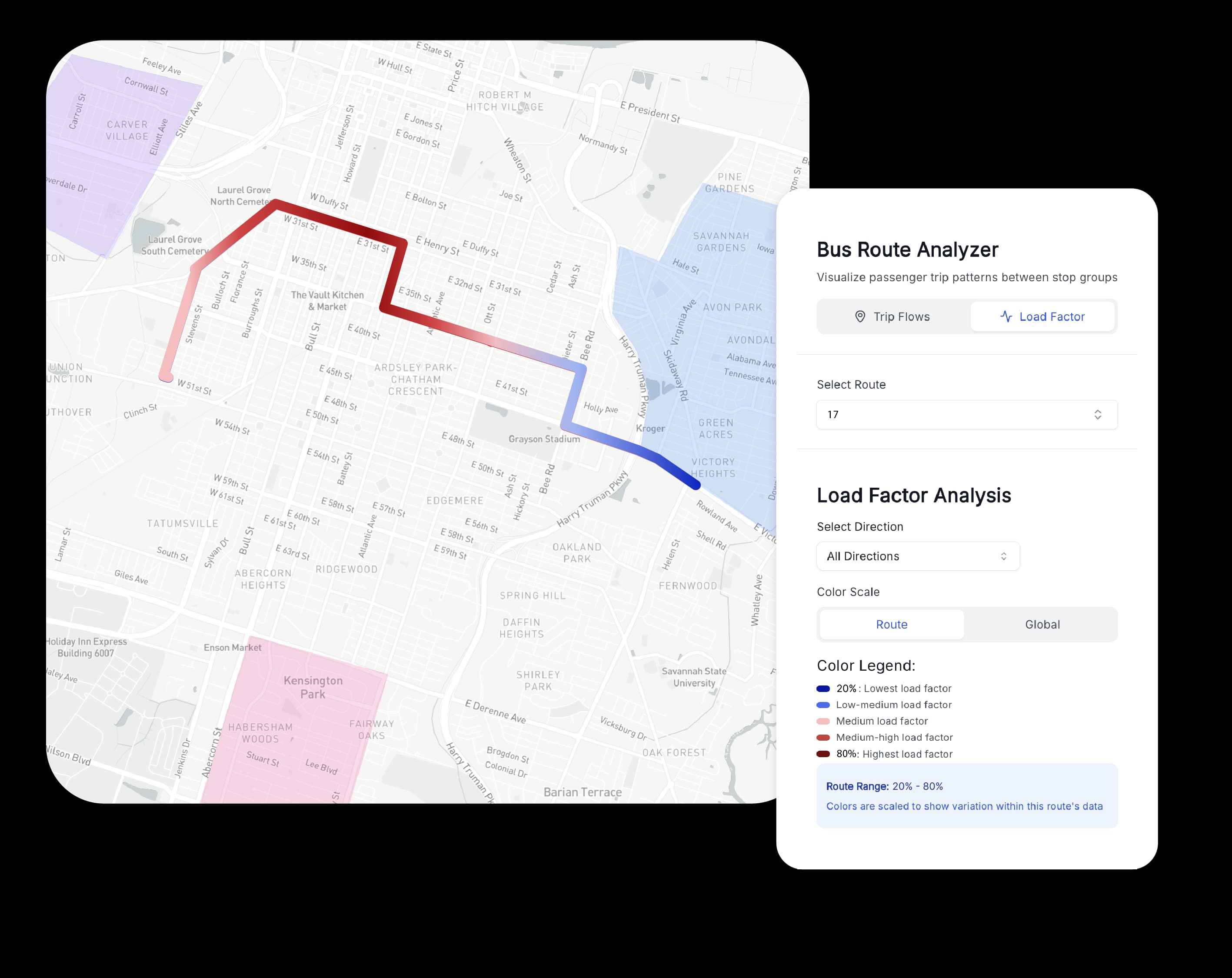
Demand modeling also helps make the recommendation engine more practical. If the platform is going to surface route, zone, stop, or frequency changes, it needs to understand not only what those changes do to the network, but how riders are likely to use the resulting service.
Constraints are not edge cases. They are the planning problem.
Demand forecasts are only one part of the planning problem. A recommendation also has to work within the limits agencies actually face.
Manual scenario planning is powerful, but it has limits. A planner can compare a few alternatives. An optimization engine can search thousands of possible combinations under the rules that matter for a project.
We have invested heavily in making optimization practical for transit planning. That means supporting:
- Service configurations.
- Flexible vehicle cost models.
- Faster path enumeration.
- Server-side travel-time preparation.
- Improvements to the optimization engine itself.
The point is not to let an algorithm make the final decision. The point is to help planners understand what is possible.
Questions optimization can help answer
In practice, the platform can help generate potential route changes, stop changes, frequency adjustments, and service policy options, then evaluate those options against the agency's goals. A team might ask how to:
- Increase ridership within a fixed budget.
- Improve access to key destinations with a limited fleet.
- Reduce low-productivity service while preserving coverage.
- Phase in a redesign without changing too much at once.
Encoding real-world limits
Those constraints are not edge cases. They are the planning problem.
Agencies rarely have unlimited budget, unlimited vehicles, or unlimited political flexibility. They may need to:
- Lock certain routes.
- Preserve service to specific areas.
- Maintain span or frequency standards.
- Limit the number of changes in a phase.
- Balance ridership goals against equity and coverage requirements.
The platform is designed so users can encode those realities directly into the planning process.
That is where optimization becomes most useful: not as a black box, but as a way to search for better answers inside the real limits agencies face.
Better recommendations, better planning conversations
The best use of optimization is not to remove human judgment. It is to sharpen it.
Optimization helps planning teams move from a small number of manually created alternatives to a broader set of defensible options. It helps agencies see which tradeoffs are unavoidable, which assumptions drive the results, and which service designs are most promising under the constraints they actually face.
That leads to better plans. It also leads to better conversations with stakeholders, because the tradeoffs become visible.
Explaining recommendations to stakeholders
A planning team can explain why a recommendation was surfaced, what goals it supports, what constraints it respects, how it compares to the baseline, and what the expected impacts may be for:
- Riders.
- Communities.
- Operations.
That is the future we are building toward: optimization that is powerful enough to search a large design space, practical enough to fit into everyday planning workflows, and transparent enough to support real agency decisions.
Optimization should not replace planners. It should help them find better options, ask better questions, and design better transit networks.
Continue Reading
This post is part of our Planning Platform product series. Read the main overview: Building the Ontra Planning Platform.


About Ontra Mobility
Ontra Mobility revolutionizes urban transit by providing a platform for cities and agencies to plan, integrate, and operate efficient, accessible, and sustainable bus, shuttle, and paratransit services. Our data-driven approach, developed by former Google engineers, optimizes routes and real-time dispatching to enhance ridership and reduce costs.