- Agency
- Madera Metro
- Location
- Madera, California
- Engagement
- Microtransit feasibility study
Comparing fixed-route and on-demand options in Madera
Modeled results at a glance
Option A: Lower cost at the same ridership
- lower cost at the same ridership
- 28%
- A separate modeled scenario focused on cost efficiency.
Option B: More riders at the same cost
- more riders at the same cost
- 42%
- Potential identified in a modeled service scenario.
Modeled potential from Ontra’s planning engagement, not observed changes in service, ridership, or spending. The figures represent alternative scenarios, not simultaneous benefits of one plan.
Travel demand and proposed service
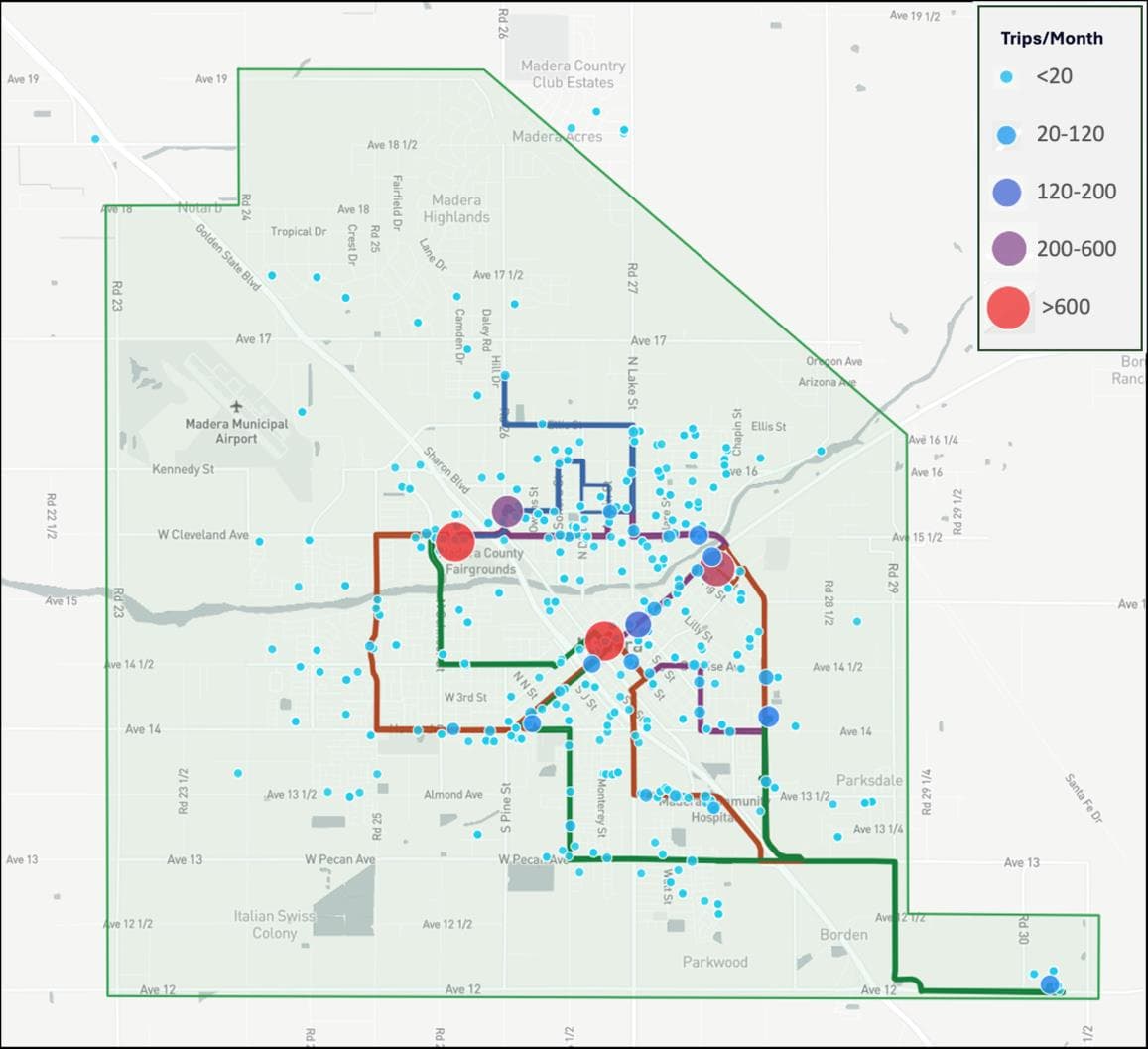
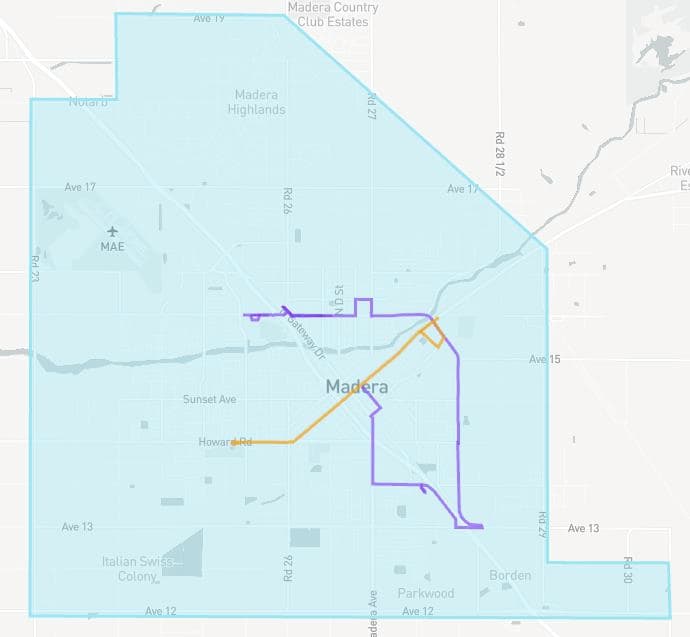
Existing travel patterns informed a proposed design combining fixed routes with on-demand service. The design shown is a study proposal, not an implemented change.
Demand: Existing travel patterns
Design: Fixed routes + on-demand
Ontra supported Madera Metro’s microtransit feasibility study with demand forecasting and service-scenario modeling, helping compare ways to improve mobility within available resources.
The challenge: choose the right mix of service
Madera Metro set out to explore how on-demand service could complement existing routes, shorten waits, and connect riders to jobs, schools, healthcare, and everyday needs. The feasibility study pairs service analysis with community input.
Flexlynqs led the project, Ontra provided its planning platform to model service scenarios and forecast demand, and Southwest Strategies Group led community outreach. A public workshop at Madera City Hall gathered residents’ perspectives on the transit system.
The approach: compare options before committing resources
Ontra’s role was to support the study with demand forecasts and alternative service scenarios. The work explored fixed-route changes and on-demand service as parts of the same planning question: how to use available resources to serve residents’ travel needs.
Comparing scenarios makes the tradeoff between ridership and cost explicit. One scenario can prioritize reaching more riders with the current budget, while another can explore delivering the same ridership at lower cost.
The results: two ways to improve resource efficiency
Ontra’s planning work modeled an option with potential for 42% more riders at the same cost, and a separate option with potential for 28% lower cost at the same ridership.
The two scenarios illustrate different priorities: serving more riders with the same resources, or maintaining ridership with a smaller budget. Community priorities and agency review remain central to choosing what to advance.
What this gives planners
The study supports a more concrete conversation about the role of microtransit alongside fixed routes. By comparing predicted demand and resource needs, the team can discuss service options with a clearer picture of the tradeoffs and a basis for phased planning.